

My Kitchen Aid stand mixer is the workhorse in my kitchen, getting near-daily use, so it’s hard to believe that I have never used an attachment – I have never even removed the little knob where the attachments go – until now:

The pasta attachment comes with presses for many different shapes and sizes of pasta. I started with rigatoni.
I had to create my own recipe for pasta dough because every gluten-free recipe I could find still used eggs. That wasn’t a problem, but I did make a mistake for the first round of pasta – I made pasta dough that was similar in consistency to bread dough and (as I soon discovered) it was too wet:
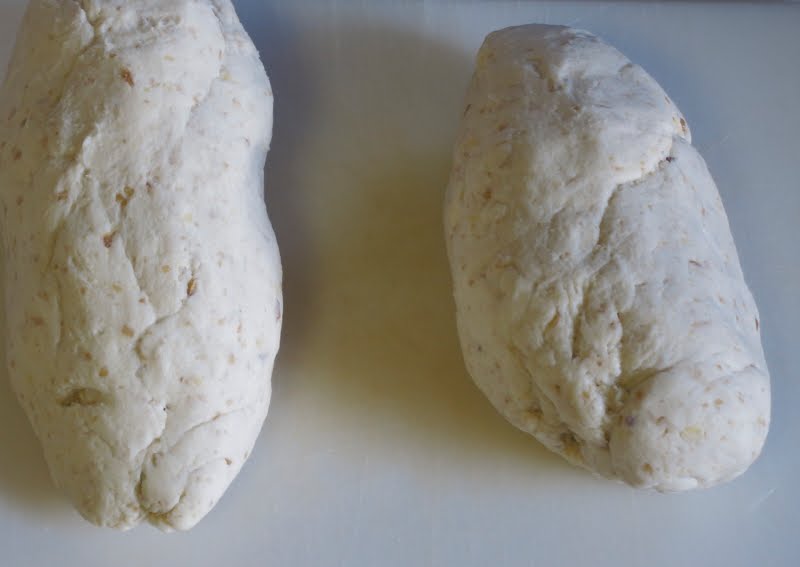
Yes, that would have been perfect for bread, but too wet for pasta. I formed it into balls, and started feeding it into my machine, and nothing was coming out – for a very long time. I took the attachment off and reattached it multiple times, certain that this was a user error. One problem with too-wet dough is that it doesn’t slice well and the pieces stick together. But the bigger problem is that the dough doesn’t funnel properly through the feeder – it goes up into the attachment instead of down. On this first batch I wasted about half of my dough, which I discovered as I was cleaning the machine. (And yes – it made the attachment much harder to clean.)

About a half dozen Google searches and YouTube videos later, I knew I needed to use less liquid in my pasta dough and I was ready for round two. This time I made spirals.
The right consistency for the dough is very crumbly:

When forming small balls, I had to really mold them together:

And it worked! When I used a low speed I got straighter spirals:

A faster speed yielded curlier spirals:

Fun, right? I found that the noodles cook best when the pasta sits for an hour or more before cooking – this allows them to dry a bit and hold their shape better.

I’ll be experimenting with more pasta dough, but here’s a basic recipe for you to start with:
Millet/Rice Pasta
¼ cup arrowroot starch (32 grams)
¾ cup brown rice flour (90 grams)
½ cup millet flour (60 grams)
½ tsp xanthan gum
¼ tsp salt
2 tbsp light olive oil
½ cup flax seed gel
4 tbsp warm water
Combine the dry ingredients and set them aside. In the stand mixer, combine all of the wet ingredients. Add the dry ingredients slowly until a crumbly mixture forms. Form acorn-sized balls and feed them through the Kitchen Aid pasta attachment.
Keep in mind that fresh pasta cooks very quickly – in as little as two minutes!
What kind of pasta dough should I make next?


15 comments:
I'm amazed that you can come up with these recipes on your own. A talent for sure. I'd love to see something like spinach pasta or tomato basil pasta. The one thing I miss about GF pasta off the shelf is that there's not much variety!
That is neat!
Kathryn, now that I have a base I'll definitely work on a spinach version!
Thanks Peggy, you have to try it!
Wow, I never knew that attachment existed. Here is my question of the day: where do I find the Flax seed gel. I have never heard of that.
I made GF penne tonight with a ground pork meat sauce and the pasta okay just okay. The sauce saved the day though. What is your fav store bought brand.
I want to try to make my own pasta! How much fun would this be?
Carolyn, I think you have the book now, right? See pages 57-58 where I describe how to make flax seed gel. (Just doing that is a lot of fun!)
I also have a blog post here and a YouTube video (AllergenFreeBaker) on how to do it.
My favorite off-the-shelf pasta is probably Orgran -- they make corn/rice and buckwheat/rice versions that I use. I find corn alone to be too sticky.
Hi, I was wondering if you think this attachment would work when making vegetable based pastas (for example grain free zuchinni pasta)
Thank you!
Love this blog- it s great for us cooking-inept but allergy free!
Elise, No, the attachment is really designed for flours. To make the kind of pasta I think you mean (i.e. just veggies) then you really need one of those new machines designed for that purpose. If you get one and you like it, let me know! (It's on my wish list too!)
Hi that looks so delish,want to make it myself just one question: can I replace millet with some other flour ( I have all kind of flours but not millet)Thank you
Hi Natalya, yes, you can substitute for the millet flour. Use 60 grams of sorghum flour, or your favorite gluten-free flour.
I can't eat rice flour. Can I use all millet flour or is there another gf flour I could use instead? Coconut or chickpea flour?
Craig, yes -- you can use all millet flour or a combination of millet and sorghum (to replace the rice flour).
Thank you for all your hard work and research, my family gets to enjoy foods without worrying about allergens! The pasta recipes I would love to see is a butternut or sweet potato gnocchi, or a ravioli. I didn't see if you had made sheets of pasta dough for ravioli or lasagne, I certainly would be interested in that. And have you tried using aquafaba in the pasta dough recipes yet? I intend to, but haven't found the time. Thank you again.
Jennifer
Jennifer, you can definitely use this recipe to make sheet pasta. I haven't tried it yet with aquafaba, but I believe it would work (with some slight adjustment to liquid). I definitely need to try that! Let me know if you do!
can i use something other than xanthan gum???
Hi there! Thank you for all of your hard work. I am on an anti-inflammatory diet. No egg, rice, grains, soy, diary. I want to make pasta so bad, but can I just use almond flour? I also can have cassava flour and tapioca.
Thanks,
Post a Comment